
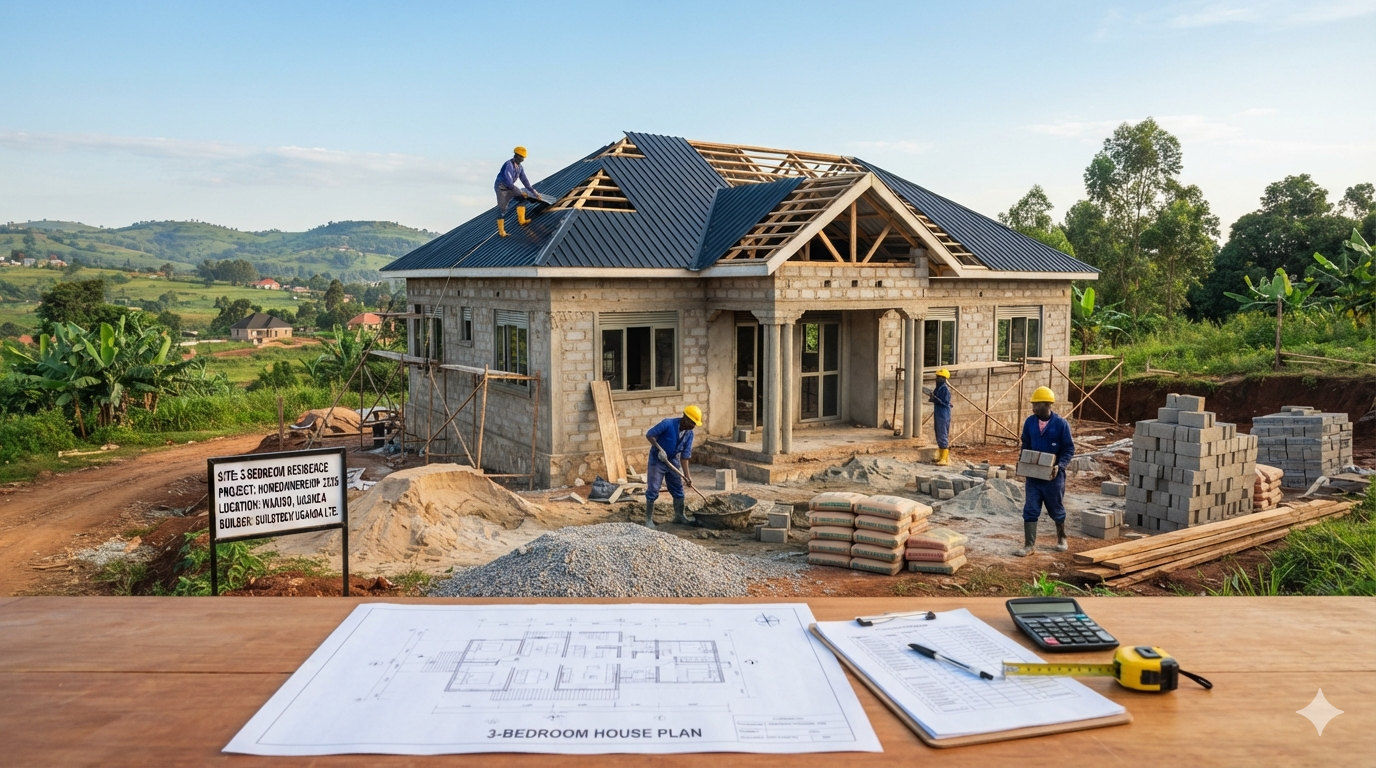
The Question Everyone Asks — and Why the Answer Is Always "It Depends"
If you've searched "how much does it cost to build a 3-bedroom house in Uganda," you've probably landed on a wide range of figures — and walked away more confused than when you started. That's not an accident. Construction costs in Uganda genuinely vary by a significant margin depending on location, specification, contractor, and timing. This guide cuts through the noise and gives you a structured way to think about your budget before you commit to anything.
Ballpark Cost Ranges for 2026
As a starting point, here are rough cost-per-square-metre ranges for residential construction in Uganda in 2026, based on finish level:
- Basic / economy finish (simple plaster, basic tiles, standard fittings): approximately UGX 800,000 – 1,200,000 per m²
- Mid-range finish (ceramic tiles throughout, decent joinery, standard electrical and plumbing): approximately UGX 1,200,000 – 1,800,000 per m²
- High-end / developer finish (imported fittings, stone surfaces, full landscaping): UGX 1,800,000 and above per m²
A typical 3-bedroom house in Uganda sits somewhere between 100 m² and 150 m² of built area. Running the numbers: a mid-range 120 m² house could cost roughly UGX 144 million to UGX 216 million in construction costs alone — before land, professional fees, and external works. Treat these figures as orientation, not a contract price. Verify them for your specific site and design with a qualified quantity surveyor or use a cost estimator as a first checkpoint.
Want a quick starting figure tailored to your project? Get a free AI cost estimate on BilaFundi before you approach any contractor.
The Five Factors That Move Your Budget the Most
1. Location — Kampala vs. Upcountry
Building in Kampala or Wakiso typically costs more than building in Mbarara, Gulu, or Jinja. Labour is more competitive in the capital, but transport and land costs push overall project costs up. Upcountry projects can save on some line items but often pay more for materials that need to be transported from Kampala. Factor in site access, road conditions, and whether your contractor needs to mobilise from a distance.
2. Foundation Type and Ground Conditions
This is one of the most commonly underestimated costs. A site with black cotton soil, high water table, or sloped terrain will require more expensive foundation solutions — strip footings, raft slabs, or even pile foundations — compared to a flat site with firm, stable ground. Always commission a soil investigation before finalising your budget. Skipping this step is a false economy that regularly derails projects mid-construction.
3. Materials Specification and Sourcing
The gap between local and imported materials is significant. Locally produced cement, clay bricks, and timber are widely available across Uganda, but prices fluctuate with fuel costs and exchange rates. In 2026, global supply chain pressures continue to affect the cost of imported items like electrical fittings, sanitary ware, and roofing sheets. Locking in material prices early — or using a bill of quantities to compare supplier quotes — can protect your budget from mid-project surprises.
4. Labour Rates and Contractor Model
You have three broad options for how you procure labour in Uganda:
- Lump-sum contract with a registered contractor: Higher upfront cost, but risk is transferred to the contractor. Best for clients who want predictability.
- Labour-only contract (with client supplying materials): Can save money but puts procurement burden on you. Requires active site management.
- Direct hire of fundis and casual labour: Lowest cost per day, but highest management overhead and quality risk. Only advisable if you or a trusted site manager will be present daily.
Skilled fundi day rates in Uganda vary by trade and region. Masons, plumbers, and electricians command higher rates than general labourers. Get itemised labour quotes, not just a single "build my house" figure from a contractor.
5. Professional Fees and Approvals
Many clients budget only for construction and are then surprised by the cost of professional services. In Uganda, you will typically need:
- An architect or architectural technologist to produce drawings
- A structural engineer for foundation and slab design
- Building plan approval from the relevant local government authority (e.g. KCCA in Kampala, or the relevant Municipal/District Council elsewhere)
- A quantity surveyor if you want a reliable bill of quantities
Professional fees typically range from 6% to 12% of construction cost depending on scope and who you engage. Do not skip these — unapproved structures face demolition orders, and unbilled projects almost always run over budget.
Common Mistakes That Blow the Budget
- Getting a single quote and treating it as gospel. Always get at least three quotes from vetted contractors and compare them against a bill of quantities.
- No contingency allowance. Build in at least 10–15% of your construction budget as a contingency. Unexpected costs — ground conditions, design changes, price rises — are the rule, not the exception.
- Changing the design mid-build. Every variation instruction costs money and time. Finalise your design before construction starts.
- Paying large advance sums without a payment schedule. Tie payments to measurable milestones (foundation complete, wall plate level, roofing complete, etc.).
How to Get Reliable Quotes from Contractors
A contractor can only give you a reliable price if they have complete, approved drawings and a bill of quantities. If you approach a contractor with a rough sketch and ask "how much to build my 3-bedroom house?", any number they give you is a guess — and it will almost certainly change once construction begins.
The right sequence is: finalise design → get structural drawings → prepare bill of quantities → issue to multiple contractors for pricing → evaluate and appoint. Rushing this process is the single biggest cause of budget overruns and disputes on residential projects in Uganda.
To find vetted contractors and construction professionals operating in Uganda, browse providers on BilaFundi and compare by trade, location, and experience.
Bottom Line
A 3-bedroom house in Uganda in 2026 can realistically cost anywhere from UGX 100 million to UGX 300 million or more depending on size, location, finish level, and how well the project is managed. The clients who stay closest to their original budget are the ones who invest in proper design, a bill of quantities, and a structured procurement process before they pour a single bag of concrete.