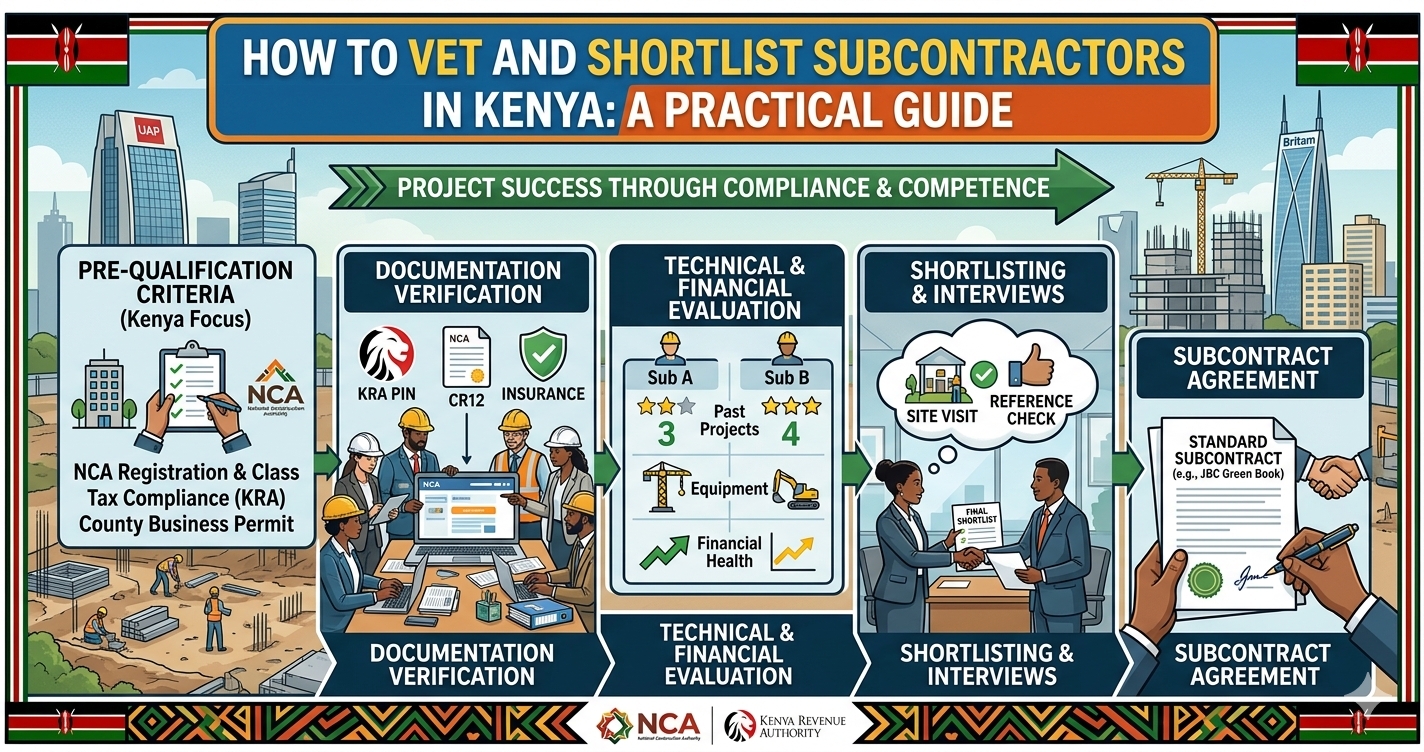
If you're planning a construction project in Ethiopia — whether a commercial building, institutional facility, or infrastructure works — understanding how to run a proper tender process is one of the most important things you can do to protect your budget and get the right contractor on site. The procurement process in Ethiopia is regulated, and even private clients benefit from following its structure. This guide explains how the construction tender process works in Ethiopia, what documents you need, and how to avoid the most common mistakes.
Why a Formal Tender Process Matters in Ethiopia
Ethiopia's construction sector has grown rapidly, with significant investment in roads, industrial parks, housing, and public institutions. That growth has attracted a wide range of contractors — from large, well-capitalised firms to small operators with limited capacity. A structured tender process is your primary tool for filtering out underqualified bidders, getting competitive pricing, and creating a paper trail that protects you if disputes arise later.
For public sector clients, Ethiopia's Public Procurement and Property Administration Agency (PPAA) sets mandatory rules under the Federal Public Procurement Proclamation. Private clients are not legally bound by the same rules, but following a similar structure — especially for projects above a meaningful contract value — is widely regarded as best practice by engineers and quantity surveyors operating in the country.
Step 1: Define the Scope Before You Invite Anyone
The single most common cause of failed tenders in Ethiopia — and across the region — is inviting bids before the scope is properly defined. If your drawings, specifications, and Bill of Quantities (BOQ) are incomplete when you issue the tender, you will receive bids that are not comparable, and contractors will price in a large risk premium to cover the uncertainty.
Before issuing any tender documents, make sure you have:
- Approved architectural and structural drawings
- A complete BOQ prepared by a qualified quantity surveyor
- Clear technical specifications for materials and workmanship standards
- A realistic programme showing the expected start date and completion period
- Confirmation of site access and any known ground conditions
Skipping any of these will cost you more in variation orders and disputes than the time you saved by rushing the tender.
Step 2: Decide on Your Procurement Method
Ethiopia's public procurement framework recognises several procurement methods. The most common for construction are:
- Open competitive bidding: Any qualified contractor may submit a bid. This is the default for public contracts above the relevant threshold and is recommended for larger private projects too.
- Restricted tendering: Invitations go to a pre-selected shortlist of contractors. Used where the pool of capable firms is genuinely limited, or where time constraints justify it.
- Request for Quotation (RFQ): Suitable for smaller, straightforward works where a formal tender would be disproportionate.
- Direct procurement (single source): Used only in exceptional circumstances — emergencies, sole suppliers, or follow-on works — and requires justification.
For most commercial and institutional construction projects, open competitive bidding or restricted tendering will give you the best balance of competition and manageability.
Step 3: Pre-Qualification — Filter Before You Bid
Running a pre-qualification (PQ) stage before issuing full tender documents saves significant time and prevents unqualified contractors from wasting your evaluation effort. In Ethiopia, contractors are graded and registered by the Ethiopian Construction Works Corporation (ECWC) and the Ministry of Urban Development and Infrastructure. Grades range from GC1 (highest capacity) down to GC7, and the grade determines the maximum contract value a contractor is permitted to undertake.
Your pre-qualification questionnaire should ask for:
- Current contractor registration grade and certificate
- Audited financial statements for the past two or three years
- A list of comparable projects completed in the past five years, with client references
- Key personnel CVs (site engineer, project manager)
- Evidence of plant and equipment ownership or access
- Valid tax clearance certificate
Only contractors who meet your minimum thresholds should receive the full tender package. This is not about limiting competition — it is about making sure every bid you receive is from a firm that could actually deliver the project.
📥 Free Download
Pre-Qualification Checklist
The documents and evidence large developers ask for before they let you bid at all — assembled once, reused for every framework.
Step 4: Prepare and Issue the Tender Package
A complete tender package for a construction project in Ethiopia should include:
- Instructions to Tenderers (ITT): How to submit, the deadline, the format required, and any mandatory attachments
- Conditions of Contract: Ethiopia commonly uses FIDIC-based contracts or locally adapted standard forms. State clearly which conditions apply.
- Drawings and specifications
- Bill of Quantities: Formatted so that contractors price each item consistently — this is what makes bids comparable
- Form of Bid: A standard form the contractor signs and submits with their price
- Bid security requirements: A bid bond, typically 1–2% of the estimated contract value, to deter non-serious bidders
Issue the package simultaneously to all shortlisted contractors and set a realistic bid period — for a mid-size building contract, three to four weeks is a reasonable minimum. Allow a formal site visit and a question-and-answer period, and issue any clarifications in writing to all bidders at the same time.
Step 5: Evaluate Bids Fairly and Transparently
Bid evaluation in Ethiopia — and under most international standards — should follow a pre-defined methodology that was set before bids were opened. The two most common approaches are:
- Lowest compliant bid: Award to the lowest-priced bidder who meets all technical and administrative requirements. Common for public works.
- Quality and cost-based selection (QCBS): Scores bids on a weighted combination of technical merit and price. More appropriate where quality or methodology matters significantly.
Never open bids before the deadline, and never share one contractor's price with another. Conduct a detailed arithmetic check on all bids, and where a price appears abnormally low, request a detailed breakdown before accepting it — an under-priced contractor is a project risk, not a saving.
Document your evaluation in a formal report, even for private projects. If a losing bidder challenges your decision, you need a clear record of how you reached it.
Step 6: Award, Negotiate, and Execute the Contract
Once you have identified the preferred bidder, issue a Letter of Intent (LOI) or Letter of Award (LOA) before the contract is formally signed. This allows mobilisation to begin while the contract documents are being finalised. The formal contract should include:
- The agreed contract sum and breakdown
- The programme and key milestones
- Payment terms and certification process
- Performance bond requirements (typically 5–10% of contract value)
- Variation, dispute resolution, and termination clauses
In Ethiopia, it is common for contracts to include a price adjustment clause for materials like cement and steel, given that commodity prices can shift significantly over the life of a project. Agree on the escalation mechanism upfront rather than leaving it to dispute later.
Common Mistakes to Avoid
- Awarding on price alone without checking the contractor's current workload — an overcommitted contractor will deprioritise your project
- Skipping the bid security on smaller projects — it filters out bidders who are not serious
- Issuing addenda too late in the bid period — if you need to change the scope, extend the deadline accordingly
- Verbal negotiations after bid submission — any changes to the scope or price must be documented before the contract is signed
Running Your Tender on BilaFundi
If you want to reach qualified contractors and manage the tender process in one place, you can post your project as a tender on BilaFundi. Contractors can submit expressions of interest, you can share documents securely, and the platform supports milestone-based payment structures once you appoint a provider. It is a practical option for private clients who want the discipline of a formal tender without building the process entirely from scratch.
📥 Free Download
Tender Bid Submission Checklist
Everything a compliant bid needs before submission — the omissions that disqualify otherwise competitive tenders.